A staircase is only as good as the wood it is built from. Choosing lumber for stringers and treads means balancing strength, durability, looks, and cost. This guide covers what professional builders look for, the best species for each part, how to protect the wood, and how to plan your layout before you buy.
In this guide
Why material choice matters
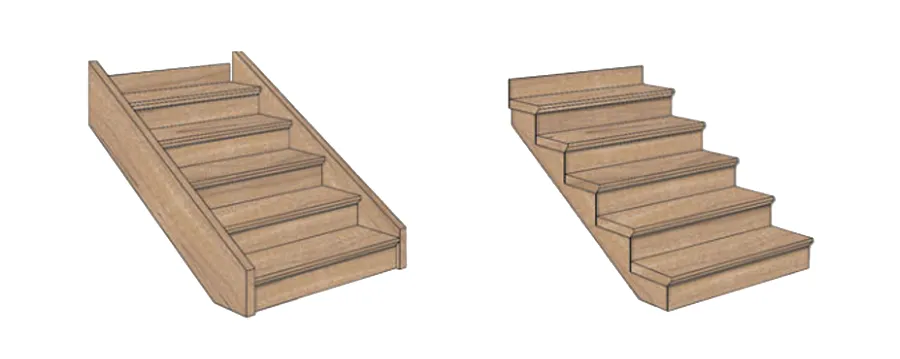
Stringers are the backbone of a staircase: they carry the treads, the risers, and everyone who uses them. Undersized or poor-quality wood can sag, crack, or fail over time. Treads take direct foot traffic, so they need to resist wear and dents. The right wood lasts longer, needs less maintenance, and makes the stairs safer and better looking.
What to look for in stair lumber
- Strength and stiffness: enough bending strength to carry the load without bounce, and no large knots or defects in critical areas.
- Dimensional stability: resistance to twisting, cupping, and warping.
- Hardness and wear resistance: especially for treads in busy areas.
- Moisture and decay resistance: essential for outdoor and damp locations.
- Workability: how well it cuts, routes, and takes stain or paint.
Choosing lumber for stringers
Stringers are structural and often hidden, so strength matters far more than appearance.
Common species and engineered options
- Southern yellow pine: strong, affordable, and the most common pressure-treated choice for outdoor stringers.
- Douglas fir and hem-fir: excellent strength and widely used for framing.
- SPF (spruce-pine-fir): economical for interior stringers when sized correctly.
- LVL, PSL, or glulam: engineered lumber that resists warping and handles long spans or heavy loads.
Sizing and layout guidelines
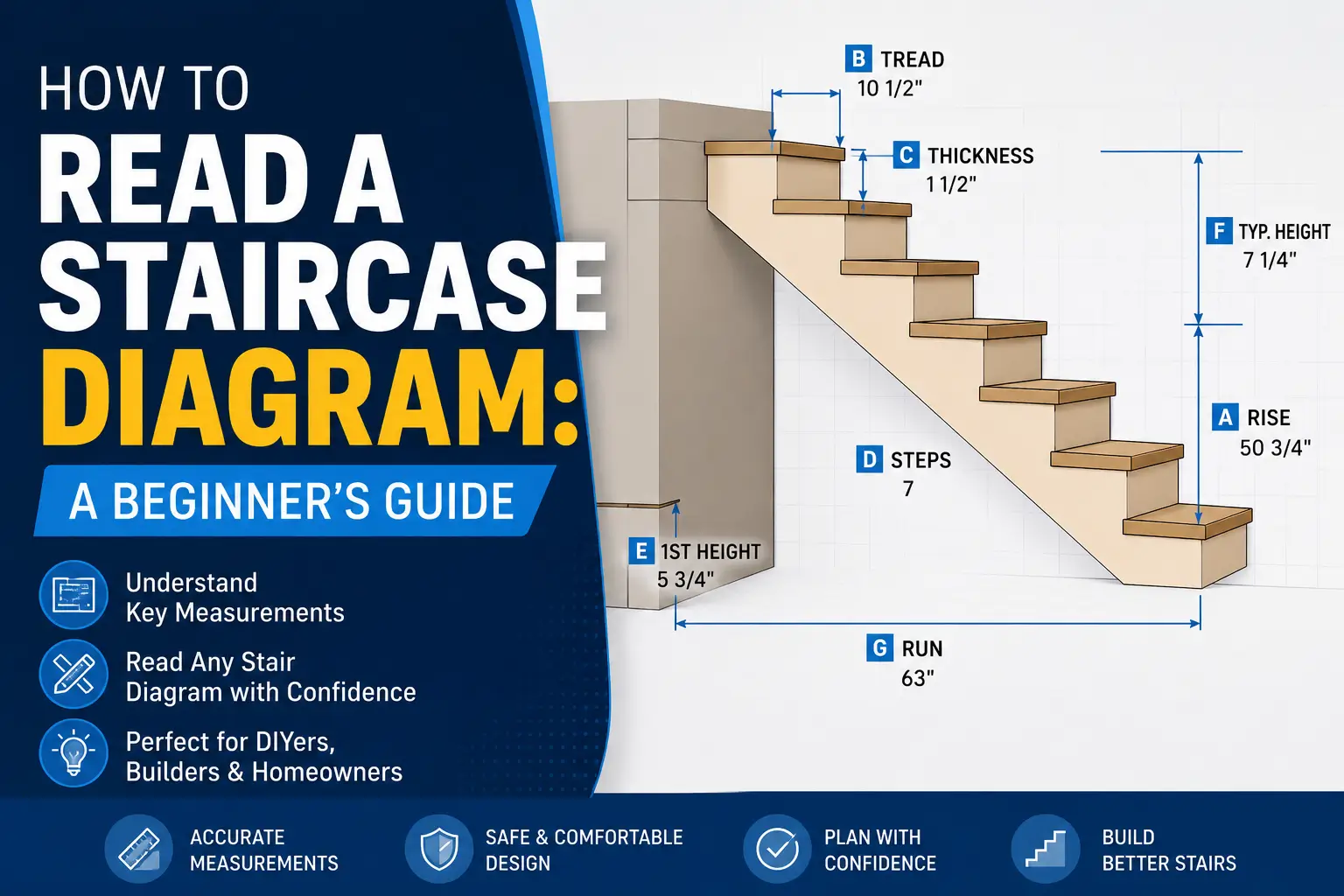
- Cut stringers are usually made from 2×12 lumber so enough wood remains below the notches.
- Leave at least 3½ inches of solid wood at the throat (many deck guides call for 5 inches) and never overcut the notches.
- Add stringers for wider stairs or thinner treads; a 36-inch stair typically uses three.
- Give the top and bottom of each stringer full, solid bearing so loads don’t concentrate on a corner.
Choosing lumber for treads and risers
Treads are the visible, hard-working face of the staircase.
Top hardwood species for treads
- White oak: hard, durable, tight-grained, and naturally water resistant — a top pick.
- Red oak: widely available and hard-wearing, with warmer tones.
- Maple: very hard with a light, clean look.
- Hickory and ash: extremely tough, with bold grain.
- Walnut, cherry, and exotics: premium looks; somewhat softer, so best for lower-traffic stairs or accents.
Paint-grade risers
For risers you plan to paint, builders often use poplar, primed pine, or MDF. Poplar is a favorite: it is affordable, stable, and takes paint well.
Thickness, depth, and edges
- Solid hardwood treads are usually about 1 inch thick (often sold as 1-1/16"). Go thicker for wide treads or heavy use.
- Tread depth is typically 10 to 11 inches; the IRC minimum is 10 inches.
- Add a rounded nosing or bullnose on the front edge for comfort and safety.
Moisture, finishing, and protection
- Acclimate the wood: let it sit where it will be installed for several days to reduce later movement.
- Seal every side: finish the tops, undersides, and edges before installation to limit moisture uptake.
- Choose a tough finish: polyurethane or conversion varnish for interior treads.
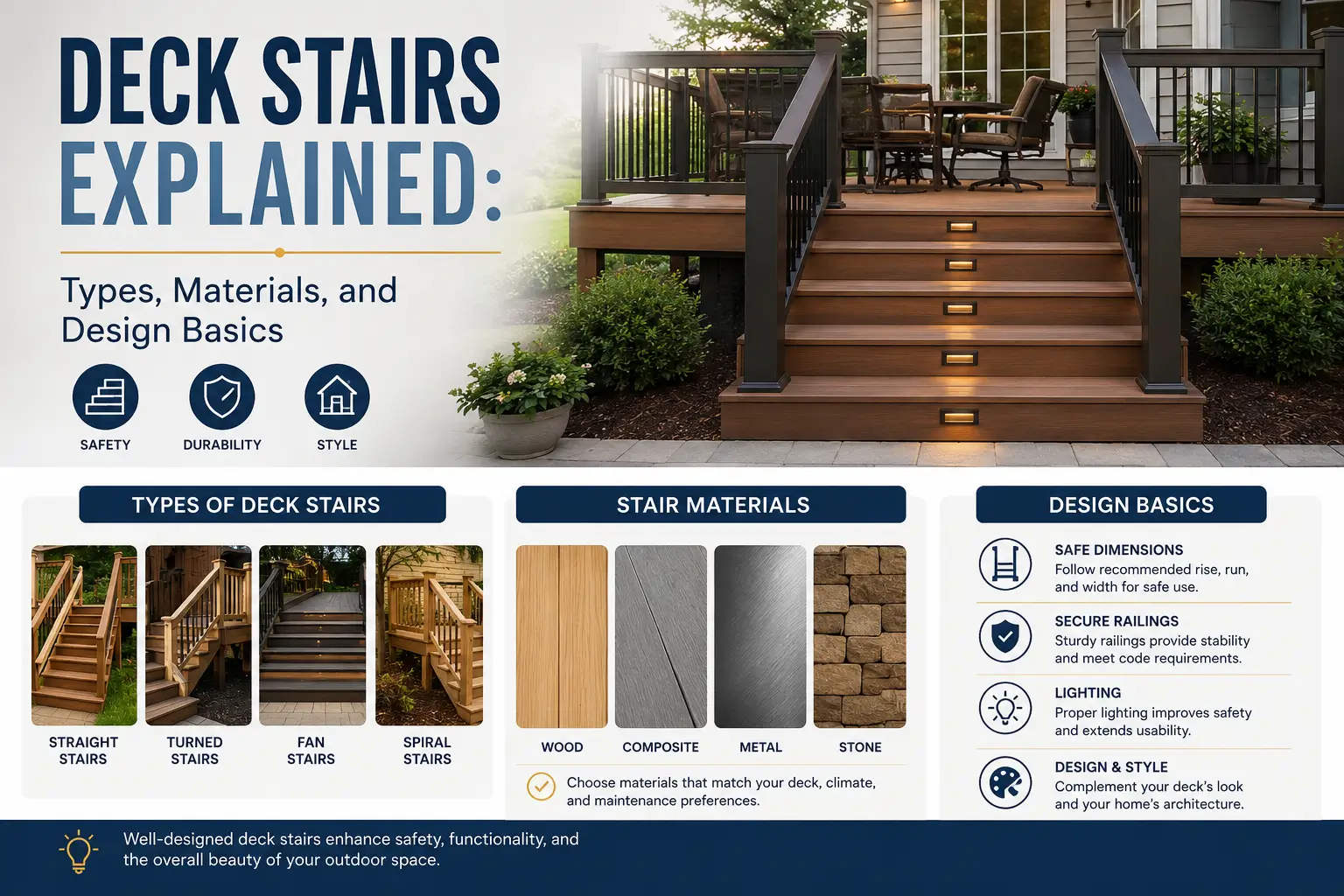
- Go exterior-rated outdoors: pressure-treated lumber, naturally durable species, composite, or PVC.
- Maintain it: inspect for cracks and wear, and refinish before damage reaches bare wood.
Structural safety and code tips
- Follow your local code for maximum riser height, minimum tread depth, and nosing.
- Make sure the treads and stringers don’t flex noticeably under load.
- Combine construction adhesive with screws or concealed fasteners to prevent squeaks and separation.
- Add glue blocks or a support cleat under wide treads to stop flexing.
Plan your layout before you buy
Work out your stair dimensions before you buy lumber so you purchase the right lengths and quantities. The stair calculator gives you:
- The exact riser height and tread count for your total rise.
- The stringer length, so you know how long your boards must be.
- Step-by-step layout points for marking the stringers.
- Automatic checks for riser height, tread depth, nosing, and flight height.
Comparison and trade-offs
| Priority | Best choices | Trade-offs |
|---|---|---|
| Durability and wear resistance | White oak, hickory, ash | More expensive and harder to machine |
| Cost efficiency | Red oak, maple | Slightly softer; may show wear sooner |
| Painted surfaces | Poplar, primed pine, MDF | Less durable under heavy scuffing |
| Moisture exposure | Pressure-treated lumber, cedar, composite, PVC | Needs ongoing sealing and maintenance (wood) |
| Structural stringers | Douglas fir, southern yellow pine, LVL | Engineered options cost more and need proper design |
In many mid-range homes, red oak treads on pine or fir stringers strike a good balance. In custom builds, walnut or exotic hardwood treads add standout style.
Installation best practices
- Dry-fit the stringers, risers, and treads before final assembly.
- Pre-drill screw holes, especially near the ends, to prevent splitting.
- Use adhesive plus mechanical fasteners to keep stairs quiet.
- Keep riser heights consistent; even 1/8 inch of variation can feel off underfoot.
- Keep nosing overhang consistent and within ¾" to 1¼".
- Sand through the grits (for example 120, 180, then 220) and let each coat of finish cure fully.
Frequently asked questions
Is pine okay for stair treads?
Pine is affordable and easy to work, but it is soft and dents easily. It is fine for low-traffic stairs or treads that will be painted or carpeted, but expect more maintenance than with oak or maple.
Should stair treads match my floors?
Matching the species and stain gives a seamless look, but a complementary wood can make the staircase a feature. Either way, aim for color harmony and a matching sheen.
How thick should stair treads be?
Solid hardwood treads are typically about 1 inch thick. Thicker treads, such as 1¼" or 1½", add durability and reduce flex on wider stairs.
Can I use engineered wood treads?
Yes. Engineered treads with a plywood core and hardwood veneer move less with humidity changes. Make sure the wear layer is thick enough to refinish and the product is rated for stair use.
Can I put new treads over my existing stairs?
Often, yes, as long as the structure underneath is sound. Remember that overlay treads change the height of the top and bottom steps, so plan the thickness carefully to keep every riser consistent.
Conclusion
Choose strong, stable lumber for stringers, durable hardwood for treads, and paint-grade materials only where finishes will hide wear. Plan your layout with the stair calculator before you buy, and you will build stairs that stay solid and look great for years.