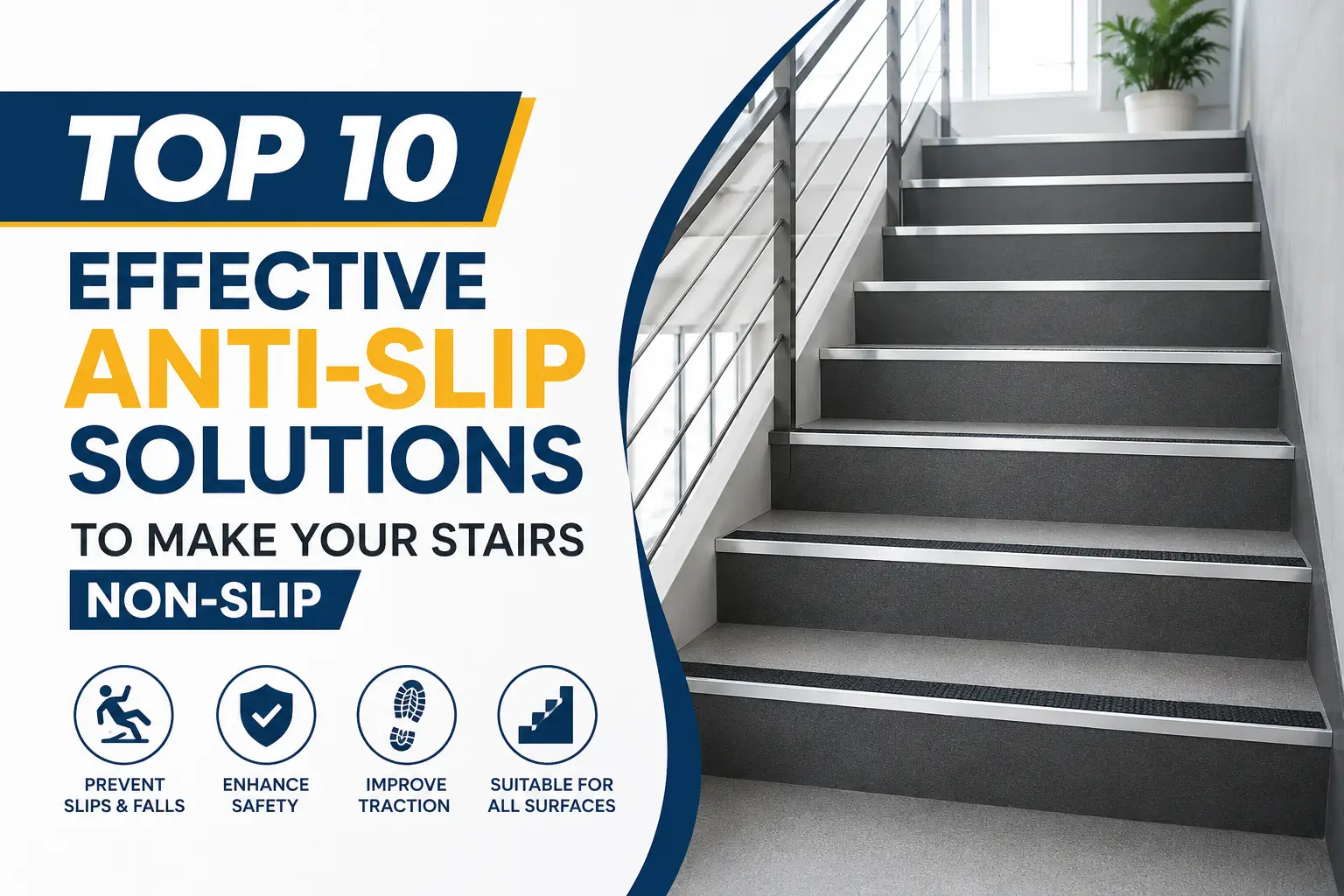
Stairs are one of the most-used features of any home or building, yet their safety is easy to overlook. A single slippery step can cause a serious fall — for children running up and down, for busy adults, and especially for older people with limited mobility.
Stairs get slippery for many reasons: moisture, dust, polished or worn surfaces, damaged treads, and poor lighting. Outdoor stairs add rain, snow, ice, and wet leaves to the list. The good news is that you can make stairs much safer without a major renovation. Here are ten effective solutions, plus how to install them properly.
In this guide
The 10 most effective anti-slip solutions for stairs
1. Anti-slip stair tape
Anti-slip tape has a gritty, textured surface that adds grip where your feet land. It is one of the simplest and most popular fixes.
- Quick, tool-free installation
- Works indoors and outdoors
- Available in many colors, widths, and clear versions
- Very budget-friendly
It works well on wood, concrete, and metal stairs. Expect to replace it periodically in high-traffic areas.
2. Non-slip stair treads
Stair treads are covers that fit over each step. They come in rubber, vinyl, carpet, and metal.
- Add reliable grip underfoot
- Protect the steps from wear
- Can refresh the look of tired stairs
3. Rubber stair mats
Rubber mats add grip and a little cushioning. Depending on the product, they are glued or screwed in place.
- Water-resistant surface
- Long service life
- Suitable for outdoor stairs
- Easy to clean
4. Anti-slip paint
Anti-slip paint contains fine grit that leaves a textured finish once it dries.
- Covers large areas quickly
- Gives a clean, uniform look
- Works on wood, concrete, and metal
- Can be used indoors or outdoors
Surface preparation is key: clean, repair, and prime as the manufacturer directs so the paint bonds.
5. Stair nosing
Anti-slip nosings are strips fitted to the front edge of each step. They add grip exactly where many slips start and make the edge of each step easier to see.
- Grip at the point of contact
- Better visibility, especially in a contrasting color
- Protects step edges from wear
- Ideal for commercial and public buildings
Many stair accidents happen at the edge of a step, so nosing is one of the most practical upgrades you can make.
6. Carpet stair runners
A runner covers the center of the staircase and leaves the edges of the treads exposed. It is a popular way to make polished wood stairs safer.
- Softer walking surface
- Better traction
- Reduces noise
- Adds a decorative touch
Make sure runners are tightly installed; a loose runner is a hazard of its own.
7. Grip strips
Grip strips are individual anti-slip strips placed on each step. Unlike full treads, they cover only the areas your feet touch most.
- Low-profile appearance
- Strong slip resistance
- Compatible with most stair materials
- Minimal maintenance
8. Rubberized coatings
Rubberized coatings create a durable, textured surface that improves footing. They are a common choice for:
- Outdoor staircases
- Pool areas
- Commercial properties
- Industrial facilities
9. Better stair lighting
Poor visibility causes many slips and missteps, especially at night. Good lighting helps people see:
- The edge of each step
- Changes in level
- Objects or spills on the stairs
- Ice, water, and other hazards outdoors
Consider switches at both the top and bottom, motion-activated lights, or LED step lights for outdoor stairs.
10. Regular cleaning and maintenance
Sometimes the simplest fix works best. Dust, mud, grease, and water drastically reduce grip, so a regular cleaning routine keeps stairs safer all year. Maintenance should include:
- Sweeping away debris
- Removing standing water, snow, and ice
- Fixing loose stair coverings
- Replacing worn anti-slip products
- Checking the stair edges regularly
Even the best anti-slip product loses its effectiveness if it isn’t cared for.
Anti-slip solutions compared
| Solution | Best for | Cost | Effort |
|---|---|---|---|
| Anti-slip tape | Quick fixes on any material | $ | Very easy |
| Non-slip treads | Indoor or outdoor full coverage | $$ | Easy |
| Rubber mats | Outdoor and utility stairs | $$ | Easy |
| Anti-slip paint | Concrete, wood, and metal surfaces | $ | Moderate |
| Stair nosing | Step edges and public buildings | $$ | Moderate |
| Carpet runner | Polished wood stairs indoors | $$–$$$ | Moderate |
| Grip strips | Discreet, low-profile grip | $ | Very easy |
| Rubberized coating | Outdoor, pool, and industrial stairs | $$ | Moderate |
| Better lighting | Every staircase, especially at night | $–$$ | Easy to moderate |
How to install anti-slip solutions properly
Methods vary by product, but these steps apply to almost all of them:
Clean the surface thoroughly
Remove dust, dirt, grease, and moisture. Adhesives and coatings only bond well to a clean, dry surface.
Repair damage first
Fix cracks, loose boards, and uneven spots before applying anything.
Follow the manufacturer’s instructions
Pay attention to temperature, cure time, and placement for each product.
Keep everything aligned
Place tape, treads, and strips consistently on every step for safety and a tidy look.
Test the result
Walk up and down carefully to confirm everything is secure and grips well.
Frequently asked questions
What is the cheapest way to make stairs non-slip?
Anti-slip tape and grip strips are the most affordable options. They install in minutes and work on wood, concrete, and metal stairs.
How do I make wooden stairs less slippery?
Add a carpet runner, clear grip strips, or anti-slip nosing to the front of each step. You can also refinish the treads with a finish that contains an anti-slip additive.
How do I make outdoor stairs non-slip in winter?
Use rubber treads or a rubberized coating, keep the steps clear of snow and ice, and add good lighting. Avoid de-icers that can damage concrete or wood; check the product label.
Does stair design affect slips?
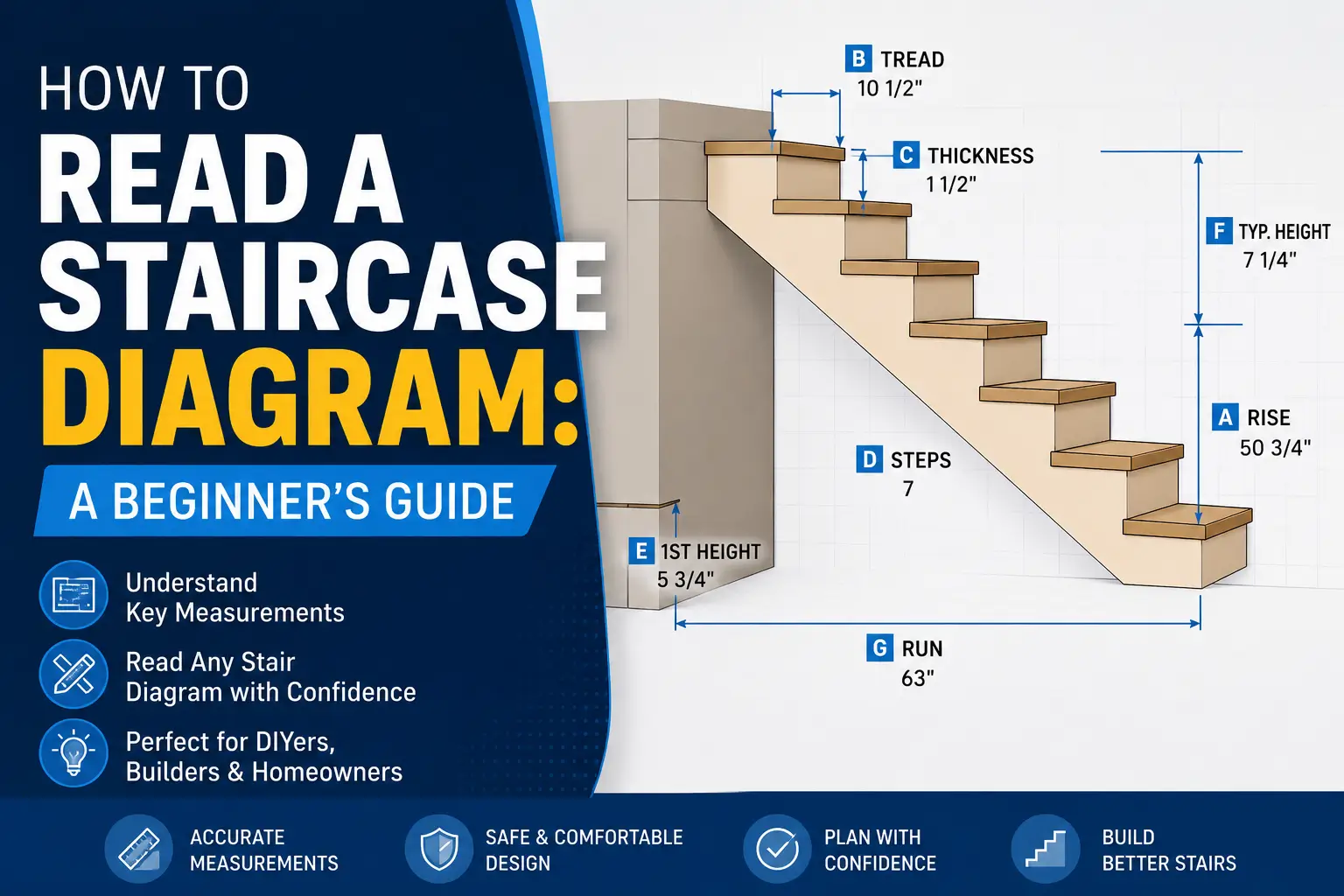
Yes. Uneven risers, shallow treads, and steep stairs all make falls more likely. If you are building new stairs, use the stair calculator to keep every step consistent and within code.
Final thoughts
Making stairs non-slip doesn’t require an expensive renovation. Simple additions such as grip strips, treads, nosing, and better lighting can dramatically reduce the risk of slips and falls. Look at your stairs, identify the hazards, and choose the solutions that fit your space and budget to keep everyone safe year-round.