Every staircase depends on its stringers for strength, alignment, and safety. Whether you are building deck stairs, interior stairs, or a multi-flight staircase, choosing between pre-cut and custom-cut stringers affects your cost, fit, labor, and finished quality. Here is how the two compare and how to decide which one suits your project.
In this guide
What are stair stringers?
Stringers are the structural boards that run along each side of a staircase, and often down the middle. They support the treads you step on and the risers between them, and they carry every load from foot traffic down to the floor or footing.
Stringers come in a few styles: cut (open) stringers with exposed notches, housed (closed) stringers with routed grooves, and box stringers. This article compares two ways to get them: buying pre-cut stringers or cutting custom stringers on site.
Pre-cut (prefabricated) stringers
How they work
Pre-cut stringers arrive with the notches already cut to a fixed pattern — typically a rise of around 7 to 7½ inches and a run of about 10 to 10½ inches. Home centers stock them in lengths for a set number of steps, and some suppliers offer semi-custom stringers cut to your measurements. Many DIYers choose them to avoid laying out and cutting stringers by hand.
Advantages
- Fast installation: little measuring or cutting on site.
- Consistent notches: factory cutting keeps every rise and run identical.
- Fewer layout mistakes: less chance of uneven steps from a bad cut.
- Less trial and error: you are not practicing on expensive lumber.
- Ideal for standard heights: perfect when your total rise happens to fit the stock pattern.
Disadvantages
- Limited sizes: they only fit certain rise and run combinations.
- Hard to adjust: trimming can throw off the top or bottom riser and break code.
- Not for unusual layouts: landings, winders, and odd heights need custom work.
- Possible thin throats: some stock stringers leave less solid wood below the notches.
- Higher material cost: you pay for the convenience, even though you save labor.
Custom-cut (site-measured) stringers
How they work
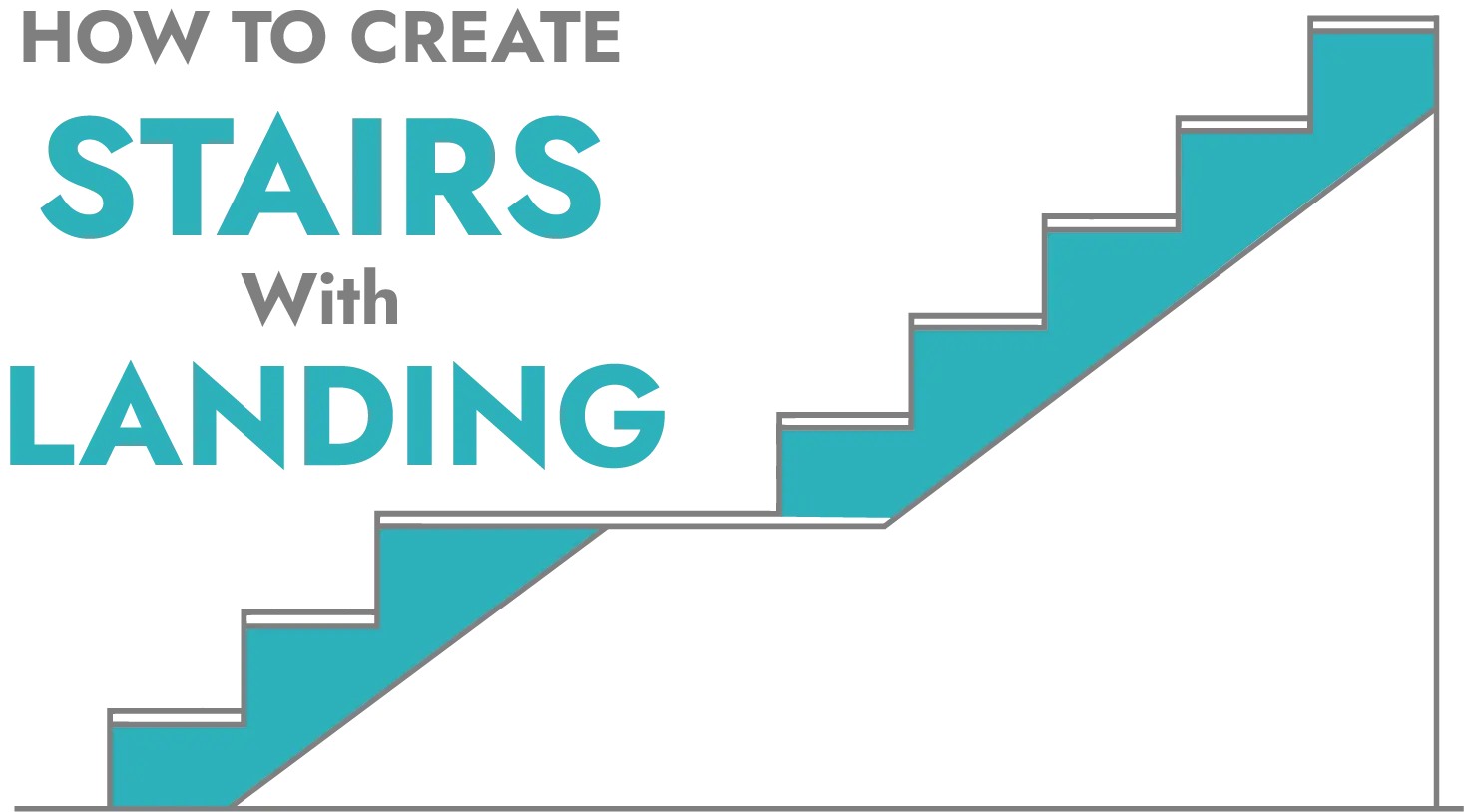
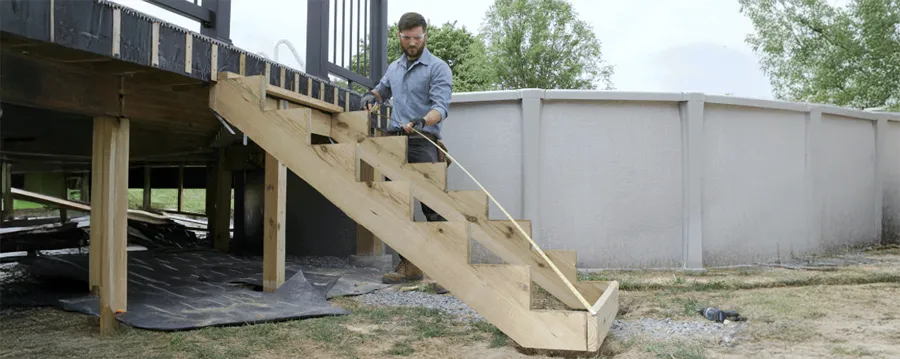
Custom stringers are laid out and cut to your exact stair. You measure the total rise, calculate the number of risers and treads, mark the pattern on full-length boards, and cut. It takes skill and care, but you get a perfect fit and complete flexibility.
Advantages
- Perfect fit: made for your exact total rise and run.
- Design flexibility: works with landings, winders, and unusual heights.
- Control over strength: you choose the board and the throat depth.
- Adapts to the site: handles uneven floors and sloped ground.
- Lower material cost: just dimensional lumber, if you have the tools and skills.
Disadvantages
- Requires skill: layout or cutting errors cause uneven steps.
- Takes longer: each stringer must be marked, cut, and checked.
- Risk of waste: a mistake can ruin a long, expensive board.
- Space to work: long boards are hard to handle in tight spaces.
Technical considerations
Rise, run, and number of steps
Divide the total rise by the number of risers to get the riser height, and multiply the tread depth by the number of treads to get the total run. Most residential codes cap risers at 7¾ inches and require treads of at least 10 inches. A pre-cut stringer only works if your total rise divides into its fixed riser height without leaving an odd step.
Throat depth and strength
The throat is the solid wood left between the inside corner of each notch and the bottom edge of the stringer. Leave at least 3½ inches, and many deck guides call for 5 inches on exterior stringers. Thin throats can crack under load, especially on long spans. Custom stringers let you control this; with pre-cut stringers, measure it before you buy.
Uniformity
All stringers in a flight must match so the treads sit flat. Riser heights within a flight can vary by no more than 3/8 inch under the IRC.
Attachment and support
Fasten the top of each stringer to the rim joist or a ledger with metal stringer hangers or brackets, and set the bottom on a solid, level base. Long stringers may need mid-span support. Outdoors, use pressure-treated lumber and corrosion-resistant fasteners.
Pre-cut vs custom-cut stringers compared
| Factor | Pre-cut stringers | Custom-cut stringers |
|---|---|---|
| Speed and labor | Quick to install, minimal measuring | Slower; careful layout and cutting on site |
| Flexibility | Limited to standard dimensions | Fits any rise, run, or layout |
| Precision | Factory-consistent notches | Depends on the carpenter’s accuracy |
| Waste | Low | Higher if mistakes happen |
| Best for | Simple, straight runs at standard heights | Landings, winders, and non-standard heights |
| Overall cost | Higher material cost, lower labor | Lower material cost, higher labor |
Which should you choose?
Choose pre-cut stringers if your total rise fits a stock pattern, the stair is a simple straight run, and you want a fast, consistent install.
Choose custom stringers if your rise doesn’t match stock sizes, the stair includes a landing or turn, or you want full control over every dimension. A carpenter can cut them if you are not comfortable doing it yourself.
How a stair calculator helps
A stair calculator works out the riser height, number of steps, total run, and stringer length from your total rise, then checks the result against code. For pre-cut stringers, it tells you quickly whether a stock pattern will work. For custom stringers, its layout points and printable diagram make marking the first board much easier.
Tips for better results
When using pre-cut stringers
- Check the stringer’s rise, run, and step count against your measurements before you buy.
- Make sure the top and bottom risers will still match the rest after installation.
- Handle and store them flat to avoid cracks and warping.
- Use corrosion-resistant fasteners outdoors.
When cutting custom stringers
- Use a framing square with stair gauges for accurate, repeatable marks.
- Cut and test-fit the first stringer, then use it as a template.
- Stop circular-saw cuts at the line and finish the inside corners with a handsaw to avoid overcuts.
- Keep the throat depth consistent on every stringer.
Safety and maintenance
- Check riser heights for uniformity to prevent trips.
- Inspect regularly for cracks, rot, and loose fasteners.
- Seal or paint exposed stringers to keep out moisture.
- Replace damaged stringers right away.
Frequently asked questions
What is the main difference between pre-cut and custom stringers?
Pre-cut stringers are factory-made with a fixed rise and run, so they are quick to install on standard stairs. Custom stringers are laid out and cut to your exact measurements, so they fit any height or layout.
Are pre-cut stringers strong enough for outdoor decks?
Yes, when they are made from pressure-treated lumber, installed to code, and properly supported. Check the throat depth and don’t exceed the span the manufacturer allows.
How do I calculate the right rise and run for stairs?
Divide the total rise by the number of risers to get the riser height, and multiply the tread depth by the number of treads for the total run. The stair calculator does both and checks them against code.
Can I modify pre-cut stringers if they don’t fit?
You can trim the top or bottom slightly, but don’t recut the step pattern. Changing it alters the riser heights, which can make the stairs unsafe and fail inspection.
What materials make the longest-lasting stringers?
Pressure-treated southern yellow pine is the standard outdoors. Indoors, Douglas fir, SPF, or engineered lumber such as LVL work well. Keep exterior stringers sealed and well drained to prevent rot.
Conclusion
Pre-cut stringers save time on standard stairs; custom stringers deliver precision when the job isn’t standard. Your site conditions, skills, and design will point you to the right choice. Either way, plan your dimensions with the stair calculator first so your stairs are safe, comfortable, and up to code.