Deck Stairs Explained: Types, Materials, and Design Basics
Introduction
Deck stairs are far more than just a means of reaching your deck from the yard. Indeed, stairs perform various functions concerning deck use, including accessibility, safety, and aesthetics. Designing an attractive, functional, and safe staircase takes into consideration several aspects, which are discussed further on.
This article will focus on the basic aspects of designing a deck staircase. Herein, we will talk about different types of deck stairs, materials commonly used in their construction, and important things to consider before embarking on the project.
Key Components of Deck Stairs
To get better acquainted with different stair types, we first need to find out the meaning of some terms.
- Tread: By tread, we understand the horizontal part of a staircase where one’s feet are placed. Comfort and safety largely depend on the tread depth.
- Riser: Riser means the vertical piece of a staircase placed between two treads. Some stair types contain risers, whereas others do not use them at all.
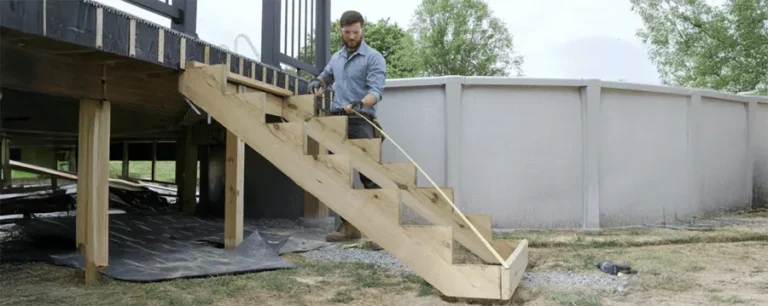
- Stringer: Stringer represents the diagonal beam that supports treads and risers. There are usually two stringers placed alongside the stairs and a middle one on wider stairs.
- Handrails and Balusters: Handrails and Balusters represent additional elements that add safety and stability. The former serves to keep people steady, whereas the latter helps prevent accidental falls through gaps left under a handrail.
- Landing: Landing is the horizontal surface located between two sections of stairs.
Knowing about these parts will surely be useful when assessing different types of deck stairs.
Types of Deck Stairs
There are several types of deck stairs to choose from, depending on the size of the deck, space constraints, etc.
I. Straight Stairs
Straight stairs run in a straight line from a deck down to the ground. Straight staircases are easy to construct and are the cheapest to install. These stairs don’t require too much planning and suit well those who have enough room in front of the deck.
II. L-Shaped Stairs
Stairs of L-shaped design comprise a section with a right-angle turn. This design can soften the steepness of the stairs and make them more natural-looking.
III. Switchback or U-Shaped Stairs
U-shaped or switchback stairs consist of two sections of stairs with the intermediate landing connecting them. This kind of staircase works great for decks that need a lot of space for their construction.
IV. Floating or Open-Riser Stairs
Floating stairs are open-riser stairs, meaning there is no riser under each tread. Such stairs tend to look airy, light, and elegant, but, like any other open riser staircase, should conform to local codes regarding the maximum distance between the treads.
V. Wraparound Stairs
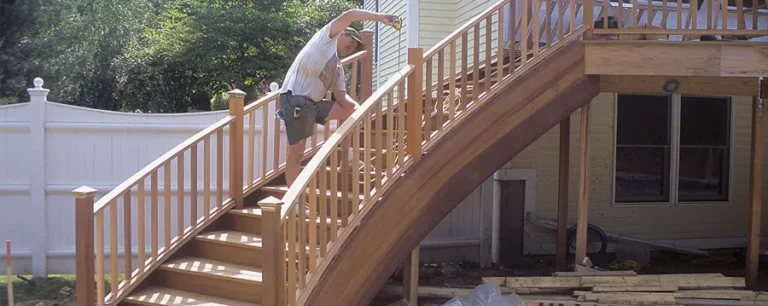
Wraparound stairs run around one of the corners of the deck. They offer impressive aesthetics while providing several points of access to the deck and the yard. Such staircases are usually seen in larger decks meant for entertaining guests.
VI.Spiral Stairs
A spiral staircase revolves around a support column. This type of stair is perfect where space is limited and for those wishing to create unique architecture. Spiral stairs can be a bit awkward for frequent use.
Common Materials Used
Choosing material is one of the aspects that largely determines stairs’ cost and maintenance requirements.
Pressure-Treated Wood
Among the most common types of material used in the construction of deck stairs are pressure-treated woods. Such wood is cheap and resistant to rotting and insects. Still, they require frequent treatments with stain and paint.
Cedar and Redwood
Red cedar and redwood are naturally resistant to moisture, rotting, and pests. Their pleasant appearance and durability make these woods popular among homeowners. The good thing about cedar and redwood stairs is that they require less treatment than any pressure-treated wood. However, their high price makes them unsuitable for all.
Composite Decking
Composite materials are used when people opt for low-maintenance stairs with a long life span. Moreover, composite materials are less susceptible to discoloration and decay than natural wood. On the downside, their price can be rather high.
Aluminum
Aluminum is an alternative material used to build lightweight and durable stairs. Being rustproof, aluminum can be applied on a regular basis in coastal regions where moisture is a problem. Besides being rustproof, aluminum stairs hardly ever need any treatments.
Concrete
Concrete stairs can be constructed to be as durable and robust as anything else. Concrete stairs are usually chosen for decks built on ground level, for patios, and other outdoor structures. Concrete stairs are rather expensive and complicated in terms of construction, but they last for a long time.
In addition to these four types of material, others can serve special purposes. For example, stone stairs and steel stairs can be used for creating landings and other architectural highlights.
Design Basics and Key Considerations
Designing a deck stair requires the careful assessment of a number of factors.
Rise and Run
The ratio of the riser height and tread depth determines the comfort of using the stairs. The common practice is to make the risers 7 inches tall and treads 11 inches deep. It should be noted that the inconsistency of the heights of risers results in a trip hazard.
Stair Width
Another important factor is the width of the staircase. The minimum required width is 36 inches. Wider stairs are more comfortable to walk on than narrow ones.
Stringer Selection
As was mentioned above, there are two types of stringers in use – solid and cut ones. The difference lies in the fact that cut stringers expose the staircase structure while the solid stringers do not.
Open vs. Closed Risers
As for the open versus closed risers, the former type allows more light to pass while the latter type gives a more classical look.
Handrail Requirements
Installing handrails becomes a necessity when there are more than three risers in a staircase. Handrails are used to ensure safe use of stairs.
Landing Size
An adequately sized landing provides for better convenience and safety. Usually, a landing has the same width as the stairs.
Direction and Traffic Flow
Another aspect to consider is the direction in which the staircase should run. As a rule, people prefer installing stairs according to natural walkways.
Final Words
The deck stairs are extremely important for both their purpose and aesthetics. Careful selection of stairs to use, proper choice of materials, and adhering to solid principles of design will yield beautiful and durable stairs that are safe.
Make sure to take all considerations into account before concluding. These include the height of the deck, the level of foot traffic, the desired level of maintenance, the budget constraints, and the general intentions for the construction of the stairs. Consult an expert when in doubt.